
How is a turbocharger used to enhance engine performance?
When you press the gas pedal and feel that surge of power, there's a good chance a turbocharger is working its magic under the hood. These remarkable devices have revolutionized engine performance, but how exactly do they work? Here are some intriguing facts that reveal the science behind turbocharging technology.
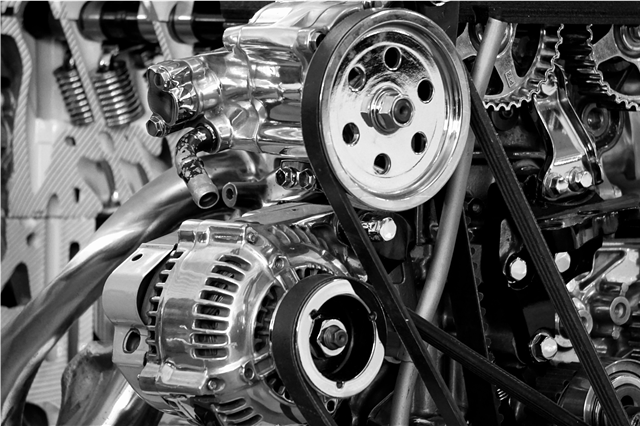
What Exactly Is a Turbocharger?
A turbocharger is essentially a turbine-driven forced induction device that increases an engine's power output by forcing more air into the combustion chamber. Think of it as a sophisticated air pump that makes engines breathe better – and perform better.
Amazing Fact #1: Turbochargers Spin at Insane Speeds
Here's a mind-blowing statistic: turbochargers can spin at speeds exceeding 150,000 RPM – that's nearly three times faster than your average car engine! This incredible rotation is achieved by harnessing exhaust gases that would otherwise be wasted. The turbine wheel spins so fast that it requires special balancing and oil cooling systems to prevent catastrophic failure.
Amazing Fact #2: They Can Increase Power by 30-50%
One of the most impressive benefits of turbocharging is the dramatic power boost it provides. A turbocharged engine can produce 30-50% more horsepower than a naturally aspirated engine of the same size. Even more remarkable, this power increase often comes without significantly increasing engine weight or size.
How Turbocharging Actually Works
The process is elegantly simple yet technically complex:
- Exhaust gases exit the engine and spin a turbine wheel
- This turbine is connected to a compressor wheel via a shaft
- The compressor draws in outside air and compresses it
- This compressed, dense air enters the engine's intake manifold
- More air equals more fuel that can be burned efficiently
- The result? More power from the same amount of fuel
Amazing Fact #3: Turbo Lag Is Becoming a Thing of the Past
Early turbo systems suffered from "turbo lag" – that delay between pressing the accelerator and feeling the power kick in. Modern technology has largely eliminated this issue. Today's turbochargers use variable geometry and electronic controls that can respond in milliseconds, providing immediate power delivery that feels seamless.
Amazing Fact #4: They're Incredibly Durable
Contrary to popular belief, modern turbochargers are remarkably reliable. Many are designed to last 150,000 to 200,000 miles or more with proper maintenance. High-quality synthetic oils and advanced materials have made today's turbo systems much more durable than their predecessors.
The Pressure Factor: Boost Technology
The "boost" created by turbochargers is measured in pounds per square inch (PSI). Most street turbo systems produce between 6-15 PSI of boost pressure. What's incredible is that this relatively small pressure increase can dramatically multiply engine output. Some high-performance applications can generate over 30 PSI of boost pressure.
Amazing Fact #5: Turbochargers Save Fuel Too
Beyond raw power, turbochargers contribute to better fuel economy through downsizing technology. A smaller turbocharged engine can produce the same power as a larger naturally aspirated engine while consuming less fuel during normal driving conditions. This is why automakers increasingly favor turbocharged four-cylinder engines over traditional V6 or V8 powerplants.
Amazing Fact #6: They Work in Extreme Conditions
Turbochargers operate in some of the harshest environments within a vehicle. The turbine side can experience temperatures exceeding 1,800°F, while the compressor side deals with intense centrifugal forces. Despite these extreme conditions, quality turbochargers are engineered to withstand years of abuse.
Amazing Fact #7: Turbo Technology Dates Back to 1905
Swiss engineer Alfred Büchi patented the first turbocharger design over 115 years ago. Initially developed for aircraft engines and marine applications, turbocharging technology was adapted for automotive use in the 1960s. Today, it's found in everything from economy cars to Formula 1 race cars.
The Modern Turbo Revolution
Modern turbochargers incorporate cutting-edge materials like ceramic bearings, advanced alloys, and computer-controlled variable geometry. Some systems even use electric motors to spin the compressor wheel, eliminating turbo lag entirely while providing instant power delivery.
Benefits Beyond Performance
Turbocharging offers multiple advantages:
- Increased power-to-weight ratio
- Improved fuel efficiency
- Reduced emissions through more complete combustion
- Enhanced engine responsiveness
- Lower overall vehicle weight due to smaller engine displacement
Conclusion
Turbochargers represent one of the most significant advances in engine technology, transforming how we think about power and efficiency. From their incredible rotational speeds to their ability to multiply engine output, these devices continue to push the boundaries of what's possible in automotive engineering.
Whether you're looking for thrilling performance or better fuel economy, turbocharging technology provides an elegant solution that maximizes both power and efficiency. The next time you feel that surge of acceleration, you'll know it's not just magic – it's sophisticated engineering working at incredible speeds to deliver exceptional performance.
Ready to experience turbocharged performance? Modern turbo systems offer the perfect blend of power, efficiency, and reliability that makes them the preferred choice for drivers who demand the best from their engines.


