
How is marine radar used to detect objects and navigate in poor visibility?
When thick fog rolls in and visibility drops to near zero, ships don't become helpless drifters lost at sea. Instead, they rely on one of the most remarkable navigation tools ever invented: marine radar. But how does this electronic eye actually work, and what fascinating secrets does it hold?
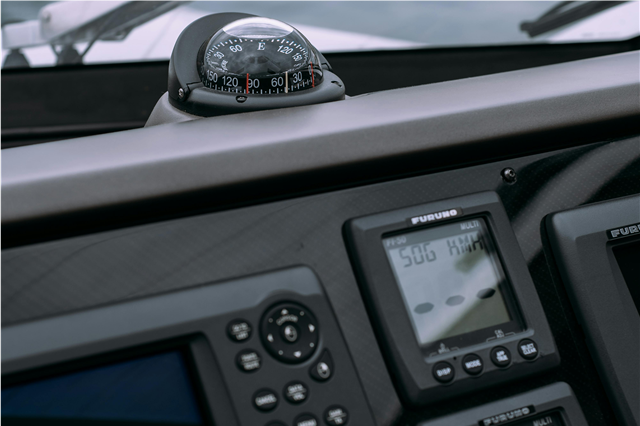
The Science Behind the Signal: Radio Waves That "See" the Ocean
Marine radar operates on a principle that would amaze even the most seasoned sailors. Ships emit short radio wave pulses that travel at the speed of light—approximately 186,000 miles per second—bouncing off objects and returning to the vessel's receiver.
Here's where it gets interesting: the radar system calculates distance by measuring how long it takes for these signals to make their round trip. Since radio waves travel at a known speed, the system can determine that an object 15 nautical miles away will return its signal in just 0.0002 seconds. That's faster than you can blink!
The Hidden Power Behind the Screen
Modern marine radar systems are surprisingly powerful, generating between 15 to 75 kilowatts of energy—enough to power several household appliances simultaneously. This electromagnetic energy is focused into incredibly narrow beams, some as precise as 0.35 degrees wide, allowing the radar to distinguish between objects as close as 3 meters apart at a distance of 1 kilometer.
Different Frequencies for Different Challenges
Marine vessels typically use two primary radar frequencies, each with unique advantages:
X-Band (3 GHz): The high-frequency workhorse that excels at detecting small objects like buoys, other vessels, and detailed shorelines. However, it's more susceptible to weather interference.
S-Band (1.5 GHz): The long-range champion that penetrates weather better and can "see" over longer distances, though with slightly less detail.
The Echo Revolution: Automatic Target Detection
Today's marine radar systems don't just display raw data—they're intelligent enough to automatically identify and track multiple targets simultaneously. Advanced systems can monitor up to 100 individual targets while continuously updating their position, speed, and potential collision risks.
Weather Wizards: Seeing Beyond the Storm
Modern marine radar isn't limited to detecting solid objects. Sophisticated systems use Doppler technology to analyze the movement of rain droplets and wave patterns, allowing crews to identify dangerous weather systems from dozens of miles away. Some advanced units can even predict wind speeds by analyzing wave formations on the water's surface.
The ARPA Advantage: Automated Expertise
Automatic Radar Plotting Aids (ARPA) represent one of marine radar's most impressive capabilities. These systems automatically calculate the closest point of approach (CPA) and time to closest point of approach (TCPA) for every detected vessel, essentially turning the radar into a proactive collision avoidance system that thinks like an experienced navigator.
Beyond Line of Sight: The Radar Horizon
Contrary to popular belief, marine radar doesn't have unlimited range. The curvature of Earth limits how far radar can "see," with the horizon typically extending about 12 miles for every 100 feet of antenna height. A ship with its radar antenna mounted 64 feet above sea level can detect objects on the horizon at approximately 96 nautical miles away—impressive, but not infinite.
Digital Revolution: From Simple PPI to Smart Displays
Early marine radar used simple Plan Position Indicator (PPI) displays that showed a green phosphor blip on a cathode ray tube. Today's digital systems offer stunning color displays with multiple overlay options, including electronic charts, GPS data, and even satellite imagery, all synchronized with the radar picture.
The Target Tracking Marvel: Predictive Navigation
Advanced marine radar systems can track targets and predict their future positions based on current course and speed. This predictive capability allows navigators to anticipate potential collision scenarios minutes or even hours before they become dangerous, providing crucial time for course corrections.
Interference Challenges: When Radars Talk Over Each Other
In busy shipping lanes, multiple radar systems can interfere with one another. Modern marine radar uses frequency agility and pulse coding techniques to minimize interference, automatically adjusting transmission characteristics to maintain clear detection even in congested waters.
The Future is Clear: Combining Forces
Today's most advanced marine navigation systems integrate radar data with Automatic Identification System (AIS) data, GPS positioning, electronic charts, and even satellite imagery. This fusion of technologies creates a comprehensive picture that's far more reliable than any single system alone.
Practical Applications: More Than Just Collision Avoidance
Marine radar serves multiple purposes beyond basic navigation:
- Search and rescue operations where visual spotting is impossible
- Fish finding capabilities in commercial fishing operations
- Port approach assistance in heavily trafficked harbors
- Weather monitoring and storm avoidance
- Navigation in narrow channels where precise positioning is critical
The Human Element: Why Experience Still Matters
Despite all technological advances, interpreting marine radar effectively still requires skill and experience. Seasoned navigators can distinguish between genuine threats and false echoes, understand the limitations of their equipment under various conditions, and make critical decisions based on radar information combined with other navigational data.
Marine radar has transformed ocean navigation from a risky guessing game into a sophisticated science. In conditions where human eyes fail, this remarkable technology continues to guide ships safely through the most challenging maritime conditions, proving that sometimes the best way to navigate is to see without looking.


