
Application of Yagi Uda Antenna
In the world of antennas, few designs are as recognizable or as widely used as the Yagi-Uda antenna. Those distinctive metal bars you see on rooftops, cable boxes, and even spacecraft aren't just for show – they're sophisticated communication tools that have revolutionized how we connect with the world around us.
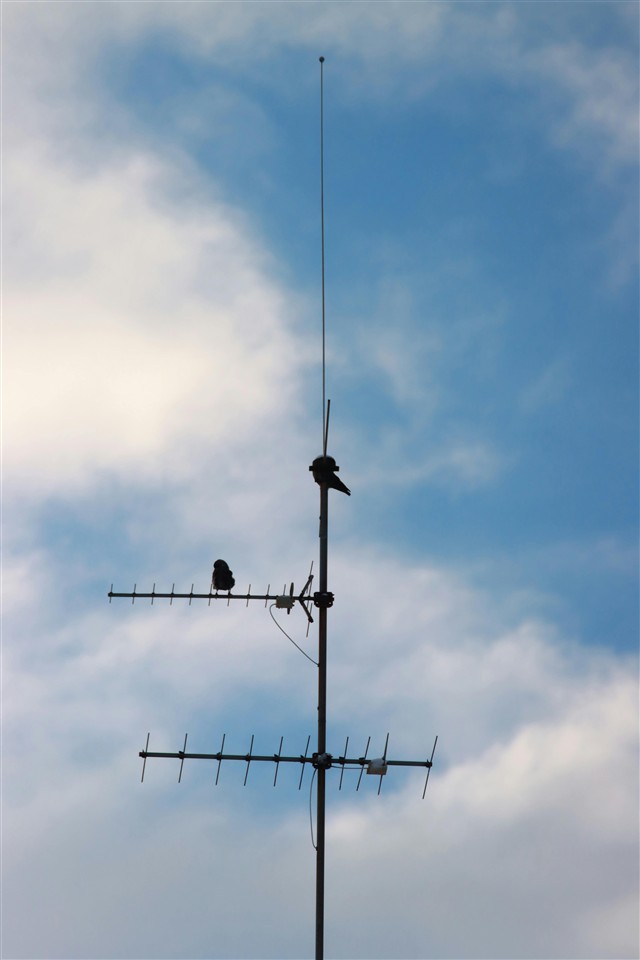
What is a Yagi-Uda Antenna?
Before diving into the fascinating applications, let's understand what makes a Yagi-Uda antenna so special. Named after its Japanese inventors Hidetsugu Yagi and Shintaro Uda, this directional antenna consists of multiple parallel elements arranged along a supporting rod or boom. The design creates incredible directional sensitivity and amplified signal strength in one specific direction.
1. Television Revolution: Bringing Entertainment to Every Home
Fact: The Yagi-Uda antenna transformed television broadcasting forever.
When television emerged in the mid-20th century, Yagi-Uda antennas became the standard for receiving broadcast signals. These antennas could capture VHF and UHF signals from dozens of miles away, making it possible for families in remote areas to access entertainment, news, and educational programming. Even today, millions of homes worldwide rely on rooftop Yagi antennas for over-the-air digital television.
The high gain (8-15 dBi) and narrow beamwidth (20-40 degrees) make these antennas perfect for locking onto specific TV transmission towers while rejecting interference from other directions.
2. Amateur Radio Operators: Hams Reaching Across Continents
Fact: Every serious ham radio operator knows the power of Yagi antennas.
Amateur radio enthusiasts use Yagi-Uda antennas to achieve remarkable long-distance communication. Multi-element Yagi arrays can reach gains exceeding 20 dBi, allowing hams to communicate across continents using relatively low power levels. During contests, you'll find entire fields filled with massive Yagi arrays "beaming" signals toward different parts of the world.
The 3-element Yagi – consisting of a driven element, reflector, and director – became so popular that it's simply called "a beam" in ham slang.
3. Wi-Fi Warriors: Boosting Wireless Signals to Superhero Levels
Fact: That DIY Wi-Fi booster you made? It's probably a Yagi design.
Modern wireless networking has embraced Yagi antennas for point-to-point connections and range extension. Popular applications include:
- WiFi signal boosters for remote buildings
- Outdoor wireless bridges connecting distant networks
- Campground internet solutions for RV enthusiasts
- Rural internet access projects
A simple 6-element Yagi can increase Wi-Fi range by 300-500% compared to standard omnidirectional antennas, making internet access possible in previously dead zones.
4. Space Communication: Talking to Mars and Beyond
Fact: NASA uses massive Yagi arrays to communicate with spacecraft billions of miles away.
The Deep Space Network employs enormous parabolic reflector antennas with Yagi-fed feed systems to maintain contact with Mars rovers, deep space probes, and interplanetary missions. The 70-meter dishes in California, Spain, and Australia use sophisticated Yagi-based feed arrays operating at X-band (8-12 GHz) and Ka-band (26-40 GHz) frequencies.
These systems must achieve incredible precision – the signal strength from Voyager 1, now over 15 billion miles away, is weaker than a typical flashlight battery when it reaches Earth.
5. Military Applications: Invisible Battlefield Communication
Fact: Military radar systems rely heavily on Yagi-Uda technology for surveillance and targeting.
Defense applications include:
- Air traffic control radar systems
- Missile guidance and tracking
- Electronic warfare countermeasures
- Surveillance and reconnaissance
Military Yagi arrays often feature frequency agility, rapid beam steering, and anti-jamming capabilities. The log-periodic Yagi design allows operation across multiple frequency bands, making these systems incredibly versatile for battlefield applications.
6. Meteorology: Predicting Tomorrow's Weather Today
Fact: Weather radar systems worldwide depend on Yagi-Uda antenna arrays for storm tracking.
Doppler weather radar installations use Yagi-fed parabolic dishes to detect precipitation, wind patterns, and severe weather formation. These systems operate at S-band (2-4 GHz) and C-band (4-8 GHz) frequencies, requiring high directivity and precise beam control – exactly what Yagi antennas provide.
The ability to rapidly scan different elevation angles while maintaining narrow beamwidth helps meteorologists create 3D atmospheric models for accurate forecasting.
7. Radio Astronomy: Listening to the Universe's Secrets
Fact: Astronomers use giant Yagi arrays to decode cosmic radio signals from the edge of space.
Radio telescopes, particularly interferometer arrays, employ Yagi-based antenna elements to study celestial objects:
- Pulsar detection and timing
- Galactic mapping using hydrogen line observations
- SETI research searching for extraterrestrial intelligence
- Cosmic background radiation studies
The Arecibo Observatory (before its collapse) used a spherical reflector with a Yagi-fed linear feed array to achieve unprecedented sensitivity in radio astronomy observations.
8. Emergency Services: Life-Saving Communication Networks
Fact: Fire departments, police, and EMS rely on Yagi systems for mission-critical communications.
Public safety communications benefit from Yagi antennas in several ways:
- Repeaters placed on mountaintops use Yagis for maximum coverage
- Mobile units on fire trucks and ambulances employ Yagi arrays for reliable communication
- Interoperability systems connecting different agencies during emergencies
The high front-to-back ratio (20+ dB) ensures clear communication by rejecting interference from unwanted directions – crucial when lives depend on clear radio contact.
9. Broadcasting: From Radio Studios to Satellite Uplinks
Fact: Commercial broadcast stations use massive Yagi arrays for transmitting content worldwide.
Applications include:
- FM radio transmission arrays for regional coverage
- TV broadcast towers serving metropolitan areas
- Satellite uplink stations sending programming to cable networks
- Shortwave broadcasting reaching international audiences
Broadcast Yagi arrays often feature power handling capabilities exceeding 10 kilowatts while maintaining strict spectral purity requirements to avoid interfering with adjacent channels.
10. Modern Innovations: Smart Homes and IoT Integration
Fact: Smart home systems increasingly incorporate Yagi technology for optimized wireless performance.
Contemporary applications include:
- Smart antenna systems that automatically track WiFi access points
- IoT sensor networks using directional Yagi links for long-range communication
- Drone communication systems requiring precise directional control
- 5G small cell networks leveraging Yagi arrays for focused coverage
Conclusion: The Future Points Forward
The Yagi-Uda antenna continues evolving with modern technology demands. Active electronically scanned arrays (AESA) incorporate multiple Yagi elements with digital beamforming capabilities. Software-defined radio systems use programmable Yagi arrays that can adapt to changing conditions in real-time.
From your living room TV to spacecraft orbiting distant planets, the humble Yagi-Uda antenna remains one of engineering's most elegant solutions to the challenge of directed wireless communication. Its combination of simplicity, efficiency, and effectiveness ensures it will continue playing a vital role in connecting our world for generations to come.
Whether you're watching the evening news, chatting with someone across an ocean, or simply browsing the internet in a remote cabin, chances are a Yagi-Uda antenna is working somewhere in the background, making that connection possible.


