
How is a drive shaft used in power transmission to the wheels?
When you press the accelerator pedal, have you ever wondered how that engine power actually reaches your wheels? The answer lies in one of automotive engineering's most critical components – the drive shaft. But this isn't just about connecting parts; it's about transferring massive amounts of energy with incredible precision. Here are 15 fascinating facts about how drive shafts revolutionize power transmission in vehicles.
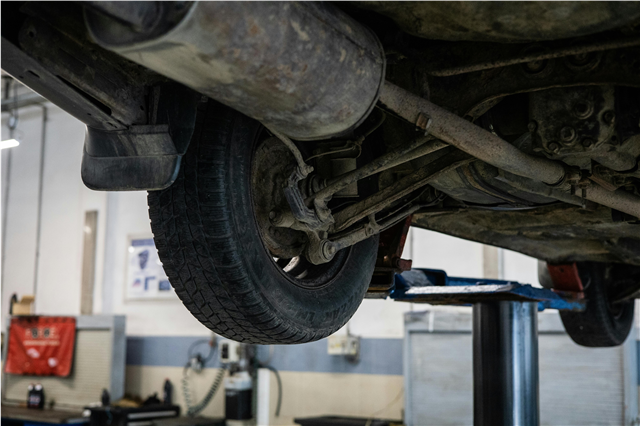
What Exactly is a Drive Shaft?
A drive shaft is a mechanical component that transfers rotational power (torque) from the engine to the wheels. Think of it as the automotive equivalent of a power highway – it channels energy from your engine through a series of components directly to where it's needed most: moving your vehicle forward.
15 Mind-Blowing Facts About Drive Shaft Technology
1. The Speed Demon Connection
Modern drive shafts can rotate at speeds exceeding 6,000 RPM while transferring power. That's faster than most car engines operate! The engineering required to maintain stability at these speeds is incredible – imagine spinning a pencil at 6,000 rotations per minute without it flying apart.
2. Torque Transfer Champions
Drive shafts can handle torque loads ranging from 200 to over 1,000 pound-feet, depending on the vehicle. That's equivalent to hanging a small car from the shaft! Heavy-duty trucks and performance vehicles push these limits even further.
3. Universal Joints: The Articulation Masters
The universal joints (U-joints) on drive shafts allow for angular movement of up to 3-5 degrees while maintaining power transfer. This flexibility is crucial as your car navigates bumps, turns, and uneven terrain.
4. Material Science Marvel
Modern drive shafts are crafted from high-strength steel alloys, carbon fiber composites, or aluminum. Carbon fiber drive shafts can be 60% lighter than steel versions while maintaining the same strength – a game-changer for performance vehicles.
5. The Balancing Act
Drive shafts undergo precision balancing to prevent vibration at high speeds. They're balanced to within 1-2 grams – that's about the weight of a paperclip! Any imbalance would create destructive vibrations that could tear the vehicle apart.
6. Length Variations Across Applications
While compact cars might have drive shafts measuring 2-3 feet, large trucks and SUVs can have drive shafts exceeding 8 feet in length. The engineering challenges increase exponentially with length.
7. Slip Yoke Technology
Many drive shafts feature slip yokes that allow the shaft length to vary by 2-4 inches. This accommodation is essential for maintaining power transfer as the suspension moves up and down.
8. The Silent Power Highway
Despite transferring hundreds of horsepower, a properly functioning drive shaft operates with minimal noise. Any humming or vibration usually indicates a maintenance issue that needs immediate attention.
9. Temperature Extremes
Drive shafts operate effectively across temperature ranges from -40°F to over 200°F. The materials must accommodate thermal expansion and contraction while maintaining structural integrity.
10. Efficiency Masters
Modern drive shafts transfer power with efficiency ratings exceeding 98%. That means less than 2% of engine power is lost in transmission – an impressive feat considering the mechanical complexity involved.
11. The Evolution of Design
Early automotive drive shafts were simple solid rods. Today's designs feature hollow construction, advanced coatings, and computer-optimized shapes that reduce weight while increasing strength.
12. Safety Critical Component
Drive shaft failure can be catastrophic, with components potentially becoming projectiles. Modern designs include safety features and are engineered with safety factors that account for extreme conditions.
13. Maintenance-Free Operation
Most modern drive shafts are designed to last 100,000+ miles without maintenance. However, they're inspected during major service intervals to ensure continued safe operation.
14. Custom Solutions for Every Application
Racing applications might use drive shafts designed for maximum torque transfer, while luxury vehicles prioritize vibration reduction. Each application requires custom engineering solutions.
15. The Future: Electric Integration
As electric vehicles evolve, drive shaft technology is adapting to handle the instant torque delivery characteristics of electric motors, which can produce maximum torque from zero RPM.
How Power Transmission Actually Works
The process begins when your engine creates rotational energy. This power travels through the transmission, where it's adjusted for speed and torque requirements. The drive shaft then picks up this energy through its input connection and channels it rearward.
Here's where it gets interesting: the drive shaft doesn't just spin in a straight line. It must accommodate the constant movement of your vehicle's suspension while maintaining perfect power transfer. This is achieved through the aforementioned universal joints, which allow the shaft to flex while continuing to transmit power.
The power then travels to the differential, where it's split between the wheels and adjusted for cornering. During a turn, the outer wheel travels further than the inner wheel, and the differential allows this while maintaining power to both wheels.
Different Drive Shaft Configurations
Rear-Wheel Drive Vehicles: Feature a single drive shaft running from the transmission to the rear differential.
Four-Wheel Drive Vehicles: Often have multiple drive shafts, including front and rear shafts, plus a transfer case connection.
All-Wheel Drive Systems: May use multiple smaller drive shafts connected through complex differential systems.
Maintenance and Longevity
Modern drive shafts are remarkably durable, often lasting the vehicle's lifetime. However, they should be inspected during major service intervals for:
- U-joint wear
- Balance issues
- Connection integrity
- Lubrication (where applicable)
The Engineering Marvel
What makes drive shaft technology truly remarkable is its simplicity combined with sophisticated engineering. While the basic concept seems straightforward – spin a tube to transfer power – the execution requires precision manufacturing, advanced materials science, and careful attention to dynamic forces.
Every time you accelerate smoothly, thank your drive shaft for transferring that engine power efficiently and reliably to your wheels, mile after mile, year after year.
Understanding your vehicle's power transmission system helps you appreciate the engineering marvels that get you from point A to point B. While drive shafts operate largely out of sight, they're critical components that deserve recognition for their role in automotive performance and safety.


